
Trade Show Stand Options Compared: Which Setup Is Right for Your Budget and Goals?
Compare trade show stand types, materials, and price tiers to find the right setup for your next Australian expo. A practical buyer's guide from Custom Merch Co.

Written by
Luna Bell
Event Merchandise
Choosing the Right Trade Show Stand: A Practical Buyer’s Guide for Australian Exhibitors
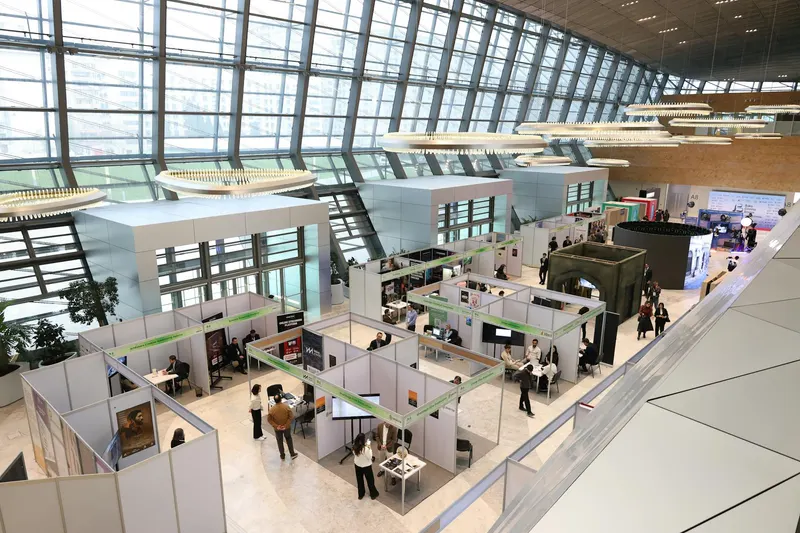
Walking the floor of an Australian trade expo — think Sydney’s ICC, Melbourne’s Convention and Exhibition Centre, or Brisbane’s showgrounds during industry season — you’ll notice something immediately: not all trade show stands are created equal. Some exhibitors have invested in modular systems that look like permanent installations. Others are working with a single pull-up banner and a folding table. And both approaches, depending on the context, can be exactly right or completely wrong.
The real question isn’t “what’s the best trade show stand?” It’s “what’s the best trade show stand for me, at this event, with this budget, targeting these people?” This guide breaks down the major stand options available to Australian businesses — including materials, price ranges, and the specific scenarios where each format genuinely shines.
Understanding the Trade Show Stand Landscape
Before comparing individual formats, it’s worth mapping out the categories. Australian exhibitors generally choose from five broad types of trade show setups:
- Pull-up and retractable banner stands
- Fabric display systems
- Modular display walls and panels
- Table-top displays
- Custom-built or hybrid stand systems
Each sits in a different price bracket, suits different space allocations, and carries different implications for how your brand is perceived. Let’s go through each one honestly.
Pull-Up and Retractable Banner Stands
What They Are
Pull-up banners — sometimes called retractable banners or roller banners — are the workhorses of the trade show world. A printed graphic is housed in a weighted base and can be extended vertically in a matter of seconds. They’re compact, lightweight, and can be transported in a slim carry bag.
Materials and Print Quality
The print substrate is typically a coated polyester or PVC-based material. Premium versions use anti-curl stock that resists warping in air-conditioned venues. The print quality varies significantly between budget and mid-range options: cheaper versions may show banding or colour inconsistency, while quality suppliers produce crisp, vibrant graphics that hold up well under event lighting.
Price Tier
Entry-level retractable banner stands can be sourced for as little as $80–$120 per unit. Mid-range units with better hardware mechanisms and improved print quality sit in the $150–$280 range. Premium double-sided and wide-format versions can reach $400 or more.
Best For
- First-time exhibitors testing the waters at smaller regional expos
- Businesses attending multiple events who need a portable, reusable solution
- Supplementing a larger stand with directional signage or product highlights
- Tight turnaround situations — lead times can be as short as 3–5 business days
Not Ideal For
Pull-up banners alone rarely communicate premium brand positioning. If your competitor is using a full fabric display system and you’re relying on two banner stands and a table, the visual disparity will work against you. They’re also vulnerable to being knocked over in high-traffic corridors.
Fabric Display Systems
What They Are
Fabric display systems use a lightweight aluminium frame — typically a SEG (silicone edge graphic) or tension system — over which a printed fabric graphic is stretched. The result is a seamless, backlit-ready display that looks significantly more polished than traditional banner stands.
These systems have grown considerably in popularity across Australian expos over the past several years, particularly at tech, health, and professional services events where brand perception carries significant weight.
Materials and Print Quality
The fabric is usually a polyester knit with dye-sublimation printing, which produces exceptional colour depth and detail. Because the graphic is stretched taut across the frame, there’s no sagging, creasing, or curling. Many fabric systems are also washable, which matters when you’re shipping displays between multiple events throughout the year.
Price Tier
A standard 2m x 2m fabric display system typically falls in the $600–$1,200 range, including the frame and one printed graphic. Larger backdrop systems — the kind that create a full wall behind a 3m x 3m stand — range from $1,200 to $3,000. Replacement graphics (if you want to repurpose the frame for different campaigns) are generally $300–$700 depending on size.
Best For
- Businesses attending four or more events per year who want a consistent, premium presentation
- Brands where visual identity and aesthetics are part of the value proposition (design agencies, hospitality brands, lifestyle products)
- Situations where backlit graphics would dramatically increase stand visibility — fabric systems are compatible with LED lighting frames
- Teams who need fast setup: most fabric systems can be assembled by two people in under 20 minutes
Not Ideal For
Fabric systems require more careful packing and storage. The frames, while lightweight, are rigid and need purpose-built carry cases. If you’re a solo exhibitor travelling interstate with limited luggage allowance, logistics can become complicated.
Modular Display Walls and Panel Systems
What They Are
Modular systems use interlocking panels, frames, or tiles that can be reconfigured into different shapes and sizes. They often include integrated shelving, counters, monitor mounts, and literature holders. Think of these as the Lego of the trade show world — flexible, expandable, and designed for repeated use.
Materials and Build Quality
Higher-end modular systems use aluminium extrusion frames with tool-free locking connections. Graphics are typically fabric or rigid panels that clip, magnetic-mount, or slide into channels. Some systems use PVC or foamboard panels for a more budget-conscious build, though these tend to look noticeably cheaper and are less durable.
Price Tier
This is where the range becomes significant. Entry-level modular systems using lightweight panels start around $1,500. Professional aluminium systems with multiple configurations sit in the $3,000–$8,000 range. Full island display systems (360-degree, for corner or open floor positions) can exceed $15,000 for premium builds.
Best For
- Businesses with a dedicated trade show budget who exhibit consistently throughout the year
- Companies with diverse product ranges that benefit from integrated shelving and demonstration space
- Organisations attending both large and small expos — modular systems can be scaled down for smaller events
- Industries like manufacturing, construction, and technology where demonstrating physical products is part of the pitch
Not Ideal For
Modular systems represent a significant capital investment and require proper storage between events. They’re not the right choice for a business testing the exhibition circuit for the first time, or for teams attending only one or two events annually.
Table-Top Displays
What They Are
Table-top displays are compact display systems designed to sit on a standard trestle or exhibition table. They include folding display boards, small fabric backdrops, pop-up mini displays, and branded table covers. Often overlooked, these formats punch well above their weight in the right setting.
Materials
Table covers are typically polyester fabric with dye-sublimation printing and come in fitted, throw, or convertible styles. Small pop-up table displays use the same retractable mechanism as full-size banner stands but scaled down for tabletop use.
Price Tier
Branded table covers range from $150 to $350. Small tabletop banner stands start around $60–$100. A complete tabletop display package — cover, small banner, and a branded counter card holder — can be assembled for $300–$600.
Best For
- Small business owners or sole traders attending boutique trade events, markets, and business expos
- Exhibitors allocated a table-only space (common at networking events, association conferences, and community expos)
- Adding brand presence to a shared stand arrangement
- Low-cost brand visibility at pop-up retail or demonstration events outside formal expo settings
Not Ideal For
A table-top setup at a large commercial expo like a major industry trade fair will struggle to compete visually with neighbouring exhibitors using full-height displays. These formats work best in appropriately scaled environments.
Custom-Built and Hybrid Stand Systems
What They Are
Custom-built stands are designed and constructed specifically for a brand, often by specialist display companies. Hybrid systems combine off-the-shelf components with custom elements — for example, a modular frame fitted with bespoke joinery, integrated screens, or custom lighting features.
Price Tier
Custom stands are typically quoted per project. Entry-level custom builds for a 3m x 3m space start around $5,000–$10,000. Full custom island stands for major expos regularly run $20,000–$60,000 or more, particularly when audiovisual elements, custom furniture, and on-site installation are included.
Best For
- Large organisations attending flagship events like major industry trade shows where stand presence directly influences commercial outcomes
- Brands launching a new product or entering a market where first impressions carry significant business stakes
- Companies with highly specific technical requirements — demo stations, custom storage, interactive elements
Not Ideal For
The economics rarely stack up for small or medium businesses. Unless you’re attending the same event annually and can amortise the build cost across multiple years, a custom build is difficult to justify.
How to Match Your Stand to Your Situation
Rather than recommending one format universally, here’s a practical decision framework:
You’re exhibiting for the first time or on a tight budget
Start with a quality fabric banner stand or a small fabric backdrop system. Invest the money you save on the display into high-quality branded merchandise — the combination of a clean, professional display and genuinely useful promotional products will outperform an expensive stand with cheap giveaways every time.
You’re a regular exhibitor attending 4+ events per year
The economics of a fabric display system or entry-level modular setup will pay off quickly. Calculate your per-event cost across the year — a $2,500 fabric wall system used at six events costs less than $420 per event, often less than a budget custom build for a single appearance.
You’re in a table-only or small footprint allocation
Don’t fight the space — work with it. A professionally printed table cover, a compact retractable banner behind the table, and a well-curated selection of branded merchandise will look far better than an overstuffed table trying to simulate a full stand.
You’re representing a major brand at a flagship expo
If your business depends on outcomes from one or two major annual events, a modular system or custom hybrid is worth serious consideration. The per-event cost is high but the opportunity cost of a mediocre presentation is higher.
The Role of Branded Merchandise Alongside Your Stand
No trade show stand, regardless of format, operates in isolation from the merchandise and collateral surrounding it. Visitors remember brands that gave them something genuinely useful — a quality tote bag, a well-made notebook, a practical tech accessory — far longer than those who handed over a cheap pen and a flyer.
When budgeting for your trade show presence, allocate merchandise as a separate line item from your stand itself. A $2,000 display investment paired with $1,500 in quality branded merchandise will typically outperform a $3,500 display with no meaningful giveaways.
Practical merchandise categories that perform consistently well at Australian expos include drinkware (keep cups, stainless water bottles), reusable bags, tech accessories, quality stationery, and branded apparel for your team. The key is choosing items your audience will actually use in their daily professional or personal lives — not items that go directly into the nearest bin at the end of the day.
Final Word: Invest Where It Matters for Your Situation
The most effective trade show stand isn’t necessarily the most expensive one in the room. It’s the one that’s appropriately matched to the event, the audience, and the commercial objective behind the appearance. A well-executed fabric display system at a regional expo will outperform an overbuilt custom stand that’s too large for the space and too complex for a small team to manage.
Use this guide as a starting point, factor in your event calendar, your team’s logistics capacity, and your total exhibition budget — then choose the format that gives you the best combination of visual impact, practicality, and return on investment. Custom Merch Co can help you source everything from the display system itself through to the branded merchandise that turns stand visitors into long-term customers.