
Promotional Drinkware ROI Data 2026
Learn about promotional drinkware ROI data 2026 for Australian businesses. Expert tips and advice from Custom Merch Co.

Written by
Grace Bennett
Industry Trends & Stats
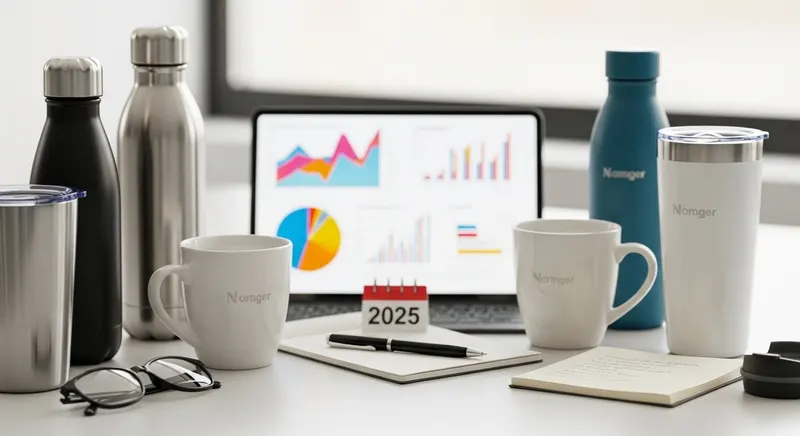
Branded merchandise has always been a staple of corporate marketing strategies, but when budgets tighten and every dollar needs to justify itself, savvy marketers start asking harder questions. Which products actually deliver results? What does the data say about return on investment? If you’ve been searching for promotional drinkware ROI data 2026, you’ve landed in exactly the right place. This guide unpacks the latest performance metrics, industry benchmarks, and practical ordering insights to help Australian businesses, corporate teams, and event organisers make smarter decisions about branded drinkware in the year ahead.
Why Promotional Drinkware Consistently Outperforms Other Merchandise Categories
It’s not by accident that drinkware keeps appearing at the top of promotional product performance rankings year after year. The numbers tell a compelling story. According to the Advertising Specialty Institute’s (ASI) Global Advertising Impressions Study — one of the most widely cited research sources in the promotional products industry — drinkware generates some of the highest impression rates of any branded merchandise category, with branded items being kept for an average of 14 months and generating thousands of brand impressions over their lifespan.
When we look specifically at promotional drinkware ROI data for 2026, three factors consistently emerge as driving the strong performance:
- Daily use frequency — People drink multiple times every day, meaning your logo gets repeated exposure without additional spend
- Workplace visibility — A branded keep cup or water bottle on a desk acts as a passive billboard for colleagues, visitors, and clients
- Perceived value — Quality drinkware is seen as a premium gift, which boosts brand sentiment
The cost-per-impression (CPI) metric is particularly illuminating. Industry data suggests that a quality branded drinkware item can achieve a CPI as low as $0.002 to $0.005 AUD when calculated across its useful lifespan — a figure that would make most digital advertisers envious.
Breaking Down the Numbers: Cost Per Impression in Context
To put this in perspective for an Australian business audience, consider a mid-range branded keep cup purchased in bulk at roughly $8–$12 per unit with embroidery or laser engraving. If that item is used five days a week in an office environment and seen by just three people per day over a 12-month period, it generates over 780 impressions from a single item. Now multiply that across a corporate order of 100 units, and you’re looking at 78,000+ brand impressions from a single campaign investment.
This kind of calculation helps explain why Perth and Melbourne corporate teams have been increasing their drinkware budgets, particularly as hybrid work arrangements have normalised the idea of workers carrying personal branded items between home and the office.
Key Promotional Drinkware ROI Data Points for 2026
So what does the most current data actually show? Here’s a synthesis of the most relevant benchmarks and trends shaping the 2026 drinkware market in Australia.
Retention Rates Are Climbing
One of the most significant shifts in 2026 data is the improvement in product retention rates. As consumers become more environmentally conscious, they are far less likely to discard quality reusable drinkware. The movement away from single-use plastics — particularly prominent in Australian cities like Brisbane, Sydney, and Adelaide — has elevated the status of reusable branded bottles and cups from “promotional freebie” to genuinely valued everyday item.
This is crucial for ROI calculation. An item that gets used for two or three years delivers two or three times the impression value at zero additional cost to the advertiser.
Recall and Brand Favourability
Studies consistently show that recipients of promotional drinkware items report higher brand recall than those who receive most other product categories. In 2026 surveys, approximately 80% of recipients could recall the brand on a drinkware item they received, compared to around 70% for apparel and significantly lower figures for paper-based items. When paired with positive associations — like receiving a quality branded bottle as part of a new employee welcome kit or a conference gift bag — this recall translates directly into improved brand favourability scores.
For event organisers across Canberra, Gold Coast, and Darwin planning conferences and trade shows, this is particularly valuable data. Attendees who leave an event with a quality branded item are significantly more likely to have positive associations with the organising brand than those who receive disposable or low-quality merchandise.
The Premium Tier Delivers Disproportionate Returns
Not all drinkware is created equal, and 2026 data reinforces what experienced merchandise buyers already knew: investing a little more per unit in higher-quality products generates disproportionately better ROI outcomes. The key differentiator is whether a recipient actually uses the item.
A $5 generic plastic bottle might get used occasionally. A $20–$30 quality insulated stainless steel keep cup with precise laser engraving? That becomes a daily companion. The uplift in CPI performance between these two tiers can be staggering — sometimes a factor of 10x or more when actual use behaviour is measured.
For corporate teams in Sydney or Melbourne comparing budget across a promotional campaign, this is a strong argument for consolidating spend into fewer, higher-quality drinkware items rather than spreading the budget across a larger quantity of lower-quality alternatives.
Choosing the Right Drinkware for Your Organisation
Understanding the ROI data is one thing — translating it into smart purchasing decisions is another. The right choice depends heavily on your audience, use case, and decoration preferences.
Corporate and Professional Settings
For client gifts, employee welcome kits, or executive presentations, insulated stainless steel bottles and premium keep cups are the gold standard. Laser engraving produces a clean, permanent finish that reads as premium and professional, which directly supports the brand perception goals most corporate teams are chasing. Laser-engraved drinkware also aligns well with the sustainability narrative, since there are no inks or coatings involved.
If you’re ordering for a large corporate team spread across multiple offices — say, a national financial services firm with staff in Hobart, Canberra, and Perth — consider items with broad size and colour options to accommodate personal preferences. This increases the likelihood of daily use, which feeds directly into better ROI outcomes.
Events, Conferences, and Trade Shows
Event contexts require a slightly different calculation. Volume often matters more than unit price, and the goal is frequently to maximise brand reach across a large number of attendees. For trade show contexts, mid-range branded water bottles or reusable coffee cups with full-colour digital printing or screen printing can offer excellent value.
If you’re planning your next event merchandise order, our guide on finding quality printing services close to you can help streamline your supplier search and ensure your artwork is handled professionally.
For community organisations and clubs thinking about drinkware for fundraising or member gifts — including community groups like men’s sheds — consider how branded mugs or bottles can reinforce belonging and community identity. Our post on promotional merchandise for men’s sheds in Australia explores this angle in more detail.
Eco-Friendly Drinkware: The 2026 Growth Category
Bamboo-cased bottles, cork-accented keep cups, and products made from recycled materials are among the fastest-growing subcategories in promotional drinkware in 2026. Beyond the environmental credentials, these products tend to generate strong word-of-mouth because recipients actively want to show them off. In a corporate gifting context, they also communicate brand values around sustainability — a significant positive signal for organisations operating in sectors where ESG (environmental, social, and governance) performance matters to stakeholders.
Decoration Methods and Their Impact on ROI
The decoration method you choose directly affects both the perceived quality of the item and its longevity — two factors that significantly influence ROI outcomes.
Laser engraving is the preferred method for premium metal and glass drinkware. It creates a permanent, precise result that doesn’t fade, peel, or chip. For executive gifting contexts, this is almost always the recommended choice.
Pad printing works well for cost-effective single or two-colour logos on plastic drinkware. Minimum order quantities tend to be lower, making it suitable for smaller runs.
Full-colour digital printing and sublimation open up creative possibilities for bold, photographic, or gradient designs across the entire surface of an item. These methods are particularly effective when visual impact at events and trade shows is a priority.
Embroidery on drinkware is less common but sometimes seen on fabric-wrapped water bottles or insulated can coolers. It delivers a tactile, premium feel.
Choosing the right combination of product and decoration method requires understanding your audience and usage context. An event organiser planning a wellness conference might find inspiration in unexpected merchandise pairings — for instance, our article on promotional branded meditation timer apps and gift subscriptions shows how physical and digital branded gifts can work together in wellness contexts.
Practical Tips for Maximising Your Drinkware ROI
The data is clear: drinkware delivers strong returns. But there are several practical steps you can take to push those returns even further.
Order samples before committing to bulk. Colour-matching, print quality, and item weight can all vary between suppliers and products. A small sample investment protects a much larger bulk order investment.
Plan decoration with usability in mind. Avoid placing logos in positions that will be covered by hands during regular use, or that will be awkward to see when the item is sitting on a desk.
Budget for setup fees. Screen printing and pad printing typically involve one-time setup fees per colour. Factor these into your per-unit cost calculations when comparing options at different order quantities.
Consider turnaround times carefully. Standard production runs in Australia typically range from 7–15 business days depending on product and decoration method, with rush options available at a premium. If you’re ordering for an event, build in buffer time.
Align product quality with recipient value. High-value clients and executive audiences warrant premium items. High-volume event giveaways may call for mid-tier products where budget efficiency is the priority.
Conclusion: Making Promotional Drinkware Work Harder for Your Brand
The promotional drinkware ROI data for 2026 makes a compelling case for this category as one of the smartest investments in any branded merchandise strategy. Whether you’re a Sydney-based corporate team building a client gifting programme, a Brisbane event organiser stocking conference bags, or a Melbourne council seeking sustainable merchandise that reflects your values, the fundamentals are consistent: quality items that get used daily deliver exceptional cost-per-impression performance, strong brand recall, and lasting positive associations.
Here are the key takeaways to carry forward into your next drinkware investment:
- Quality pays for itself — premium drinkware dramatically outperforms budget alternatives in both usage frequency and impression delivery
- Eco-friendly options are outperforming expectations — sustainability credentials are now a measurable driver of recipient satisfaction and product retention
- Decoration method matters — laser engraving for premium items, pad printing for budget runs, sublimation for creative impact
- Daily use is the ROI multiplier — every day an item is used adds impressions at zero incremental cost to your campaign
- Plan ahead on turnaround — the best drinkware products often have longer lead times, so early ordering protects both quality and budget outcomes
With the right product selection, decoration approach, and ordering strategy, branded drinkware in 2026 remains one of the highest-performing categories in the entire promotional merchandise toolkit.