
How a Melbourne Property Firm Nailed Their Race Day Gifting (And What You Can Learn From It)
See how one Melbourne business used branded gift packs for race day to boost client retention and staff morale — with real numbers and actionable takeaways.

Written by
Harry Santos
Seasonal & Holiday
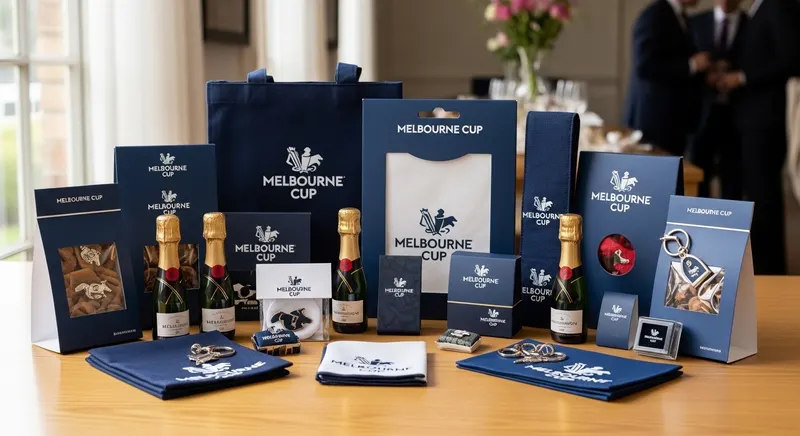
The Brief: 85 Clients, One Big Tuesday, Zero Room for Error
In late August last year, the marketing manager at a mid-sized Melbourne property development firm — let’s call them Harwick & Associates — was sitting across from her director with a single slide on the laptop screen. It showed their client retention rate had dropped four percentage points in twelve months. The director’s response was simple: “The Cup is coming. Let’s use it properly this time.”
What followed was a ten-week process of planning, sourcing, and executing Melbourne Cup branded gift packs for race day events that resulted in measurably better client engagement, a LinkedIn post that reached over 14,000 impressions organically, and three new project referrals traced directly to relationships rekindled on the day.
This is how they did it — and what any Australian business can take from the playbook.
The Starting Point: Treating the Gift Pack as a Brand Statement, Not an Afterthought
In previous years, Harwick & Associates had handed out generic gift bags filled with lollies and a branded pen. Recipients were polite. Nobody remembered them. This time, the marketing manager approached the project differently: the gift pack had to earn its place on the table.
The internal brief was clear. Each pack needed to:
- Feel premium and considered, not mass-produced
- Be usable on the day itself, not just something to carry home
- Carry the brand with confidence, not desperation
- Work for a mixed crowd of clients aged 30 to 65
That last point shaped every product decision. The team moved away from anything gimmicky and focused on items with broad appeal and high day-of utility.
What Went Into the Packs
After consulting with a promotional products specialist, the Harwick team landed on six items for their Melbourne Cup branded gift packs for race day events. Total investment: $118 per pack across 85 units, plus $1,400 in design fees. Here’s what made the cut and why.
A Custom Cooler Bag in Racing Green
This was the anchor piece. A structured, insulated cooler bag in a deep racing green — close to the firm’s secondary brand colour — with a debossed logo on the front panel. Not a flimsy drawstring cooler, but a rigid-base bag with a zip closure and a detachable shoulder strap.
Why it worked: guests at Flemington used these immediately. They were spotted carrying them through the lawn areas and across to the members’ enclosure. The bag was distinctive enough to generate comments — “Where did you get that?” — without being over-branded. Post-event, the marketing manager received three messages from clients saying they’d used the bag again on the weekend.
Branded Sunscreen Sticks (SPF 50+)
A spring race day in Melbourne can swing between 17°C and 32°C. Sunscreen is genuinely needed. Rather than the standard sachet-style sunscreen, the team sourced twist-up SPF 50+ sticks in a compact tube, printed with the Harwick logo and a simple “Race Day 2024” line in white.
Cost per unit at this quantity: approximately $6.50. Perceived value: significantly higher. Guests kept remarking it was a “thoughtful” inclusion. Practical gifts outperform decorative ones almost every time — this was proof.
A Pocket Race Guide Holder in Branded Leather-Look Vinyl
One of the smartest inclusions was a slim, landscape-format holder for the official race guide — essentially a branded sleeve with a small zippered pocket for cash or cards. Printed in a matte charcoal with gold foiling on the logo, this item looked far more expensive than it was (around $9.80 per unit at volume).
It solved a real problem — where to keep your guide, a bit of cash, and your phone when you’re moving through the crowd — and kept the Harwick name visible all day in guests’ hands.
Custom Champagne Flutes (Two Per Pack)
A pair of stemless champagne flutes in a drawstring pouch, laser-engraved with the firm’s wordmark. These were the “wow” item in the pack. When clients opened the box, the flutes were what they picked up and showed each other.
The team was careful here: they sourced flutes with a genuine weight and feel, avoiding the lightweight acrylic versions that cheapen the experience. Glass flutes, properly wrapped, communicated quality. At $14.20 per pair, they represented good value for the impression they created.
A Branded Cap with a Point of Difference
Every race day pack in the universe seems to include a cap. Harwick’s marketing manager almost dropped it from the list for that reason. She kept it in, but with one change: the cap was a structured five-panel in a stone/sand colour with a tonal embroidered logo. No garish contrast stitching. No slogan. Just a clean, wearable hat that didn’t scream “corporate freebie.”
Several clients wore theirs on the day. One showed up in it at a subsequent client meeting — and mentioned it unprompted.
A Handwritten-Style Notecard
Not a product as such, but worth including in the breakdown. Each pack contained a folded A5 card printed in a handwritten script font with the client’s first name and a two-sentence personal note from their Harwick contact. The printing mimicked a handwritten style convincingly, and most recipients assumed the notes had been written individually.
The marketing manager’s estimate: this card cost less than $1.50 per unit to print and was mentioned in almost every thank-you message they received after the event.
The Packaging Decision That Made Everything Land
The individual items were good. The packaging made them great.
Each pack arrived at the event venue pre-assembled in a rigid-lid gift box, wrapped in branded tissue paper in the firm’s racing green, with a satin ribbon and a wax seal-style sticker bearing the Harwick monogram. The boxes were stacked on a display table near the marquee entrance, with each client’s name on a small card tucked under the ribbon.
This moment of discovery — arriving at the event and seeing your name on a beautiful box — set the tone for the entire day. Clients photographed the boxes. Several posted them to Instagram and LinkedIn before the first race was called. One post from a prominent architect client generated 340 likes and tagged Harwick’s business page.
Total packaging cost: approximately $8.20 per unit. A small premium on an already considered budget.
The Outcomes: What the Numbers Showed
Harwick & Associates tracked the event’s impact across three metrics over the following 90 days.
Client re-engagement rate: Of the 85 clients who attended, 71 had some form of follow-up contact with the firm within six weeks — emails, calls, a coffee meeting. That’s an 83.5% re-engagement rate from a single event. In the prior year, with a less considered approach, that figure sat at around 52%.
Referral traceability: Three new project enquiries in the quarter were directly attributed to conversations started or rekindled at the race day event. Based on average project values, that represented a potential pipeline contribution of roughly $280,000.
Social media reach: The firm’s LinkedIn post recapping the event — featuring a flat-lay image of the gift pack — reached 14,200 accounts organically and generated 67 comments. It became their highest-performing post for the year.
Staff morale: Twenty internal team members also received packs (a smaller, adapted version without the client-specific elements). In the firm’s quarterly pulse survey, “feeling valued by the organisation” rose four percentage points from the previous quarter — the same measure that had dropped the year before.
The Timeline They Used (And Where They Almost Came Unstuck)
The Harwick team began briefing their promotional products supplier in late August for a first-Tuesday-of-November event. That gave them approximately ten weeks — tight, but workable with disciplined decision-making.
Here’s how those weeks broke down:
- Weeks 1–2: Product shortlisting, supplier briefing, initial artwork concepts
- Weeks 3–4: Sampling key items (the flutes and the cooler bag in particular), refining colour matches, approving digital proofs
- Weeks 5–7: Production of all items, packaging materials sourced and printed separately
- Week 8: Delivery of all components to a single fulfilment point, quality check
- Week 9: Pack assembly, name cards printed and inserted, boxes sealed
- Week 10: Delivery to the venue, final logistics confirmed
The near-miss came in week four, when the cooler bag manufacturer flagged a two-week delay on the racing green fabric. The team had a contingency option ready — a navy bag with a contrast base — and were prepared to switch. The original colour came through in time, but the lesson was clear: always have a fallback on hero items, and always build buffer into your timeline.
What Works for Smaller Budgets and Smaller Guest Lists
Not every business runs a 85-person client event at Flemington. The Harwick case study is instructive precisely because the principles scale down just as well.
A company hosting a 20-person office sweep can still build Melbourne Cup branded gift packs for race day events that feel considered and memorable — it just means making smarter choices about which items carry the most weight.
For smaller runs and tighter budgets, the highest-impact items tend to be:
- A single premium item done exceptionally well (a quality insulated tumbler, a leather goods piece) rather than five average ones
- Personalisation — even a printed name label dramatically increases how valued recipients feel
- Packaging — a well-presented modest gift outperforms an expensively stocked but carelessly wrapped one every time
The golden rule from the Harwick experience: spend more on fewer things and present them better. It applies at $30 per head as much as it does at $118.
Choosing the Right Supplier for Race Day Packs
The Harwick marketing manager’s most consistent advice when asked about the project is to start the supplier conversation earlier than feels necessary. Promotional products — particularly those requiring colour-matching, custom packaging, and multi-item assembly — have longer lead times than most marketers expect.
Key questions to ask any supplier before committing:
- Can you produce physical samples of the key items before we place the full order?
- What is your process if a product is delayed or arrives with a quality issue?
- Do you handle pack assembly and fulfilment, or do we need to organise that separately?
- Can you provide references from previous race day or event clients?
A supplier who can answer all four questions confidently — and ideally show you examples of previous race day work — is worth paying a modest premium for. The downside of a botched gift pack at a client-facing event is always greater than the cost of doing it properly.
The Bigger Picture: Why Race Day Is One of the Best Branding Investments of the Year
The Melbourne Cup sits in a unique position on the Australian corporate calendar. It’s one of the very few events where attendance is near-universal, emotional engagement is genuinely high, and the setting is inherently celebratory. That combination is difficult to manufacture and impossible to replicate.
Melbourne Cup branded gift packs for race day events work because they meet people at a moment of genuine enjoyment and connect your brand to that moment tangibly. The pack goes home. The flutes get used again. The cooler bag appears at the weekend farmers’ market. The brand impression compounds.
For Harwick & Associates, one well-executed race day event shifted client retention metrics, generated a measurable referral pipeline, and gave their marketing manager a case study she’s still presenting internally a year later.
The investment was $118 per head, $1,400 in design, and ten weeks of structured planning. The return, by any reasonable measure, was considerably more than that.